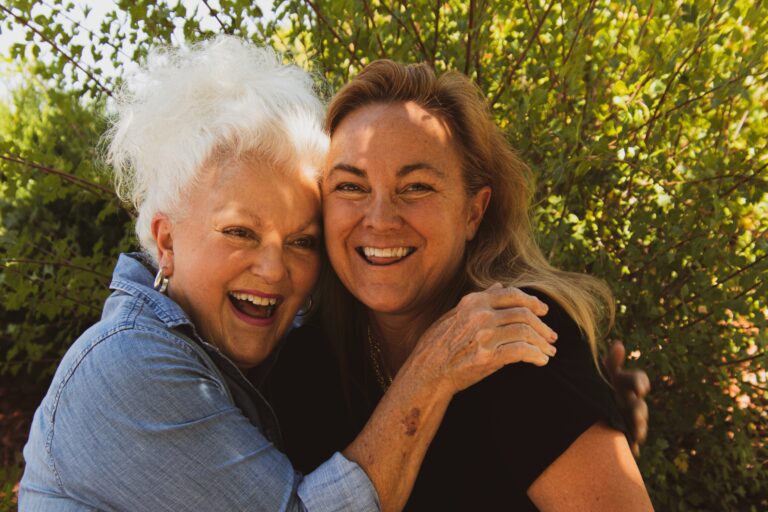

One of my earliest memories is sitting in the activity room of a nursing home.
I was three years old.
My mother worked there, and while other children spent their days at daycare or with babysitters, I spent mine surrounded by older adults. I colored with them. Played games with them. Listened to their stories. Even at that age, I was fascinated by the lives they had lived and the wisdom they carried.
By the time I was 13, I was working in senior care myself.
Over the last four decades, I’ve worked in nursing homes, assisted living communities, memory care, rehabilitation centers, hospitals, and home care agencies. I’ve watched senior care evolve dramatically. And one thing has stayed remarkably constant.
Families feel guilty when they realize they need help.
They say things like:
“I should be able to handle this myself.”
“My mother took care of me. I should be able to take care of her.”
“If I were a better daughter, a better son — I wouldn’t need anyone else.”
I understand where those feelings come from. But I also know something else: most of that guilt is built on a comparison that no longer reflects reality.
The World Your Parents Grew Up In Is Not the World You’re Caregiving In
Many people look back at previous generations and assume families once handled everything on their own, no outside help required. The truth is far more complicated.
People simply didn’t live as long. And many of the health conditions we see in today’s older adults either weren’t as common or weren’t managed long enough for people to live with them for years or even decades.
Today, families are caring for loved ones with Alzheimer’s disease, other dementias, Parkinson’s disease, diabetes, heart disease, mobility challenges, stroke recovery, and multiple chronic conditions — often simultaneously. People are surviving illnesses that would have been fatal a generation ago. That’s a genuine medical achievement.
But it also means caregiving has become far more complex.
According to the National Alliance for Caregiving and AARP, more than 53 million Americans are currently providing unpaid care to an adult family member. The average family caregiver spends 24 hours per week on caregiving tasks — and that number rises sharply when a loved one needs skilled or memory care.
Many older adults today need assistance, not for days or weeks, but for months or years. Meanwhile, their adult children are often raising families of their own, managing demanding careers, and navigating real financial pressures.
The demands on today’s caregivers are unlike anything previous generations faced. Yet most people still judge themselves by a standard that no longer fits.
How Do You Know When Your Parent Actually Needs Help at Home?
This is the question I hear most often, and I want to give you a straight answer rather than a checklist of twenty items.
Watch for changes, not moments.
A single missed medication isn’t a crisis. A parent who has consistently taken their medications for decades and is now missing doses three times a week — that’s a pattern worth taking seriously. The same applies to personal hygiene, housekeeping, nutrition, and social engagement.
Here are the specific signals that tell me a family needs to have this conversation:
You’re calling to check in multiple times a day because you’re worried. Your parent has had an unexplained fall, or more than one. Meals aren’t being prepared, or the refrigerator has food that’s gone bad. Bills are going unpaid or mail is piling up. Your parent seems more confused, more withdrawn, or more anxious than they used to be.
If several of those are true, you’re not overreacting. You’ve been watching, and what you’re seeing is real.
The families I’ve worked with in North Austin, Round Rock, Georgetown, and the surrounding communities who navigate this best are the ones who trust that instinct instead of waiting for something to go wrong.
Love and Caregiving Are Not the Same Thing
This is probably the most important thing I can say, so I’ll say it plainly.
Loving someone and knowing how to provide skilled care for them are two completely different things.
A daughter can love her mother deeply and still not know how to safely help her in and out of the shower. A husband can adore his wife and still feel completely overwhelmed by her medications, her confusion, her new and frightening behaviors.
Love does not provide training.
Love does not create extra hours in the day.
Love does not prevent exhaustion.
What often happens is that family caregivers absorb more and more responsibility until they are physically, emotionally, and mentally depleted. Then they feel guilty for being tired. They feel guilty for being frustrated. They feel guilty for wanting a single afternoon to themselves.
According to a study published in the Journal of the American Medical Association, family caregivers have a 63% higher mortality rate than non-caregivers when controlling for other health factors. The physical toll of unsupported caregiving is not theoretical. It’s documented.
Needing help does not mean you love your parent less. It often means you’ve been carrying too much for too long.
What Caregiving Actually Looks Like (That Nobody Warns You About)
When people imagine helping an aging parent, they picture driving to appointments. Helping with groceries. Sharing a meal. Those things are certainly part of it.
But caregiving frequently includes much more.
Bathing. Dressing. Toileting assistance. Incontinence care. Managing complex medication schedules. Preventing falls. Monitoring cognitive changes. Supporting someone who may no longer consistently recognize family members. Being available at 2 a.m.
These responsibilities are physically demanding and emotionally exhausting. Many family caregivers feel isolated because nobody prepared them for the full picture.
A 2023 report from the AARP Public Policy Institute found that family caregivers report high emotional stress, and report high financial strain. If you’re in that group and you’ve been telling everyone you’re fine — you don’t have to keep saying that.
The Transition Home from the Hospital Is When Families Get Blindsided
I want to address one specific situation, because it’s where I see families struggle most.
Your parent is discharged from the hospital or a rehabilitation facility. The discharge paperwork is dense. The nursing staff gives you a stack of instructions. And suddenly you’re home, and it’s just you.
This is not a plan. Discharge paperwork is not a care plan.
The first 30 days after a hospital stay are the highest-risk period for older adults. Medicare data consistently shows that roughly 1 in 5 seniors is readmitted to the hospital within 30 days of discharge — and most of those readmissions are preventable with proper in-home support.
The families who avoid that outcome don’t wait until they’re struggling. They call a home care agency before the discharge date — sometimes while their parent is still in the hospital — and they build a transition plan that includes medication management, mobility assistance, nutrition support, and follow-up coordination with the medical team.
If your parent is heading home from a hospital or rehab facility and you’re not sure what support looks like, that’s exactly the kind of question we help families answer.
How to Know If an Agency Is Actually Good — Not Just Claiming to Be
This is where I want to be direct with you, because families in Round Rock, Georgetown, Cedar Park, and across North Austin ask me this regularly.
Every agency says they provide quality care. Very few can prove it.
Here’s what to actually look for: third-party verification based on independent surveys of real clients and real caregivers. Not self-reported ratings. Not marketing language. Evidence collected by an outside organization that has no financial stake in the result.
The Provider of Choice and Employer of Choice designations from Activated Insights (formerly Home Care Pulse) are awarded based on those kinds of surveys. They measure whether clients are satisfied with their care and whether caregivers are satisfied with their workplace — because those two things are directly connected. Agencies that treat their caregivers well attract and retain better caregivers. It’s not complicated, but it is rare.
Community recognition matters too. Being voted Best of Round Rock by the community for two consecutive years reflects the kind of trust that’s built through real relationships over time — not through advertising.
When you’re evaluating agencies, ask directly: what third-party validation do you have? If the answer is “our clients love us,” keep asking. Then validate this with what you see on Google reviews, social media and an in person meeting.
Professional Care Doesn’t Replace Family. It Restores It.
One of the most persistent fears I hear: “If we bring in a caregiver, what will my parent think? Will they feel like we’re abandoning them?”
Here’s what I’ve actually watched happen, in family after family.
When professional care handles the physical tasks — bathing, medications, mobility, meal preparation — something shifts. Family members stop showing up as caregivers. They show up as family again.
Instead of every visit being about logistics, it becomes about connection. Looking through old photos. Watching the grandchildren. Sharing a meal without an agenda. Having the conversations that actually matter.
The professional caregiver handles the work.
The family gets to handle the relationship.
That’s not replacing family. That’s protecting what the family relationship is actually for.
The Families Who Navigate This Best Don’t Wait for a Crisis
I’ve spent four decades watching how families make decisions about care. The ones who tend to land in the best situations share one thing in common: they didn’t wait for a crisis to force their hand.
They paid attention to the warning signs. They had the hard conversation before the fall, before the hospitalization, before the emergency placement decision made under exhaustion and fear.
They built a plan. They built a team. They recognized that caring for an aging parent is a long road, and you can’t run a marathon by sprinting the first mile.
Waiting until things get bad enough rarely produces good outcomes. It produces rushed decisions and exhausted families.
If you’re already sensing that something needs to change, that instinct is worth trusting.
What I’ve Learned After Four Decades in Senior Care
The strongest caregivers I’ve known are not the ones who refused to ask for help.
They’re the ones who recognized when they needed it.
They understood their limits. They asked questions. They built a support system that included professionals, friends, and family. Most importantly, they allowed themselves grace.
Because caregiving isn’t a test of how much you can carry.
It’s about making sure your loved one receives the care, the dignity, the safety, and the support they deserve — and that you have what you need to keep showing up for them.
If you’re caring for an aging parent in North Austin, Round Rock, Georgetown, Cedar Park, Leander, or the surrounding communities and feeling overwhelmed, please hear this: you are not failing. Needing help doesn’t mean you’ve fallen short. It means you’re paying attention.
Stacey Eisenberg is the founder of SeniorKareExpert.com, where she helps families navigate elder care decisions with confidence and clarity. For families in the North Austin area, A Place At Home – North Austin provides in-home care services with the same philosophy: 512-521-3010.
Frequently Asked QuestionsIs getting outside help for an aging parent a sign that I’m letting them down?
No, getting help for an aging parent is not a sign of failure. In many cases, it is one of the most loving, responsible decisions a family can make. Adult children often carry an enormous amount of pressure to do everything themselves, especially when they deeply love their parent and want to honor the care they once received from them. But aging can bring challenges that go far beyond what one person can safely manage, including mobility issues, memory loss, medication needs, chronic illness, and emotional changes like loneliness or anxiety. Recognizing that your parent needs more support than you can provide alone does not mean you are abandoning them. It means you are paying attention, being honest, and acting in their best interest. The truth is that caregiving is not supposed to fall entirely on one person’s shoulders. Families are often juggling careers, children, marriages, finances, and their own health concerns while trying to care for an aging parent. When support is added, whether through home care, respite services, adult day programs, or assisted living, it can improve your parent’s safety and quality of life while also protecting your ability to remain emotionally present. Help does not replace your role. It strengthens it. Instead of being consumed by exhaustion and constant crisis management, you can spend more meaningful time with your parent and focus on connection, comfort, and advocacy.How do I know when it’s time to ask for help with my aging parent’s care?
There is rarely one dramatic moment that makes the decision obvious. More often, the need for help shows up gradually through small but important warning signs. You may notice your parent forgetting medications, missing doctor appointments, struggling to prepare meals, wearing the same clothes repeatedly, falling behind on bills, or having difficulty bathing and moving safely around the house. Sometimes the signs are emotional rather than physical. A parent may become isolated, confused, withdrawn, or unusually irritable. In other cases, the biggest sign is what is happening to the caregiver. If you are constantly overwhelmed, losing sleep, missing work, feeling resentful, or worried every hour of the day, that is a signal that the current situation is no longer sustainable. It is better to seek help early than to wait until there is a fall, hospitalization, or full-blown crisis. Early support allows families to make thoughtful choices instead of rushed decisions. It also gives the aging parent a greater voice in the process. Asking for help can start with something simple, such as a few hours of in-home support each week, transportation assistance, meal delivery, or medication management. The right time is often the moment you realize that love alone cannot meet every practical need. Support works best when it is proactive, not reactive.What kinds of support are available for aging parents and their families?
There are many forms of support available, and the best option depends on your parent’s health, personality, level of independence, and daily needs. Some families begin with informal help from relatives, neighbors, or close friends. Others bring in professional in-home caregivers who assist with bathing, dressing, meal preparation, companionship, transportation, and light housekeeping. Home health services may also be appropriate if your parent needs skilled nursing care, physical therapy, or medical monitoring. Adult day programs can provide structure, social engagement, and supervision during the day, especially for seniors who are isolated or experiencing cognitive decline. For families facing more advanced care needs, assisted living, memory care, or nursing home care may become the safest and most supportive path. These settings can provide around-the-clock oversight, medication management, social opportunities, and specialized care that simply cannot be replicated at home by one exhausted family member. There are also respite care services designed specifically to give family caregivers a break. In addition, support can include geriatric care managers, elder law attorneys, support groups, and counseling for caregivers who need guidance and emotional backup. The most important thing to remember is that help is not all-or-nothing. Care can be built in layers, adjusted over time, and tailored to what truly serves your parent and your family.How can I talk to my parent about accepting help without making them feel powerless?
This can be one of the hardest parts of the process, especially if your parent values independence, privacy, or control. The conversation usually goes better when it is approached with empathy rather than urgency or authority. Instead of telling them what they can no longer do, focus on what support can make easier, safer, and less stressful. Use respectful language and involve them in the decision-making whenever possible. For example, rather than saying, “You can’t manage on your own anymore,” try saying, “I want to make sure you have the support you need so things feel easier and safer.” That shift in language helps preserve dignity and frames help as a tool, not a punishment. It also helps to have the conversation before a crisis forces immediate action. When families wait too long, emotions tend to be high and choices feel more threatening. If your parent resists, start small. A housekeeper, meal service, medication reminder system, or a few hours of companion care each week may feel more acceptable than a major change all at once. Listen carefully to what they fear. Often resistance is really about deeper concerns such as losing independence, becoming a burden, or being forgotten. When those fears are acknowledged directly and compassionately, trust grows. Reassure them that accepting help does not mean losing their role in the family or their right to make choices. It means creating a plan that supports their well-being while honoring their voice.How can getting help actually improve my relationship with my aging parent?
When one family member becomes the sole caregiver, the relationship can slowly shift from parent and child to manager and patient. Conversations become centered on medications, appointments, safety concerns, and daily tasks. Stress builds, patience wears thin, and both people can start feeling frustrated or emotionally depleted. Bringing in help can ease that pressure. When professional or outside support takes over some of the hands-on responsibilities, you may be able to return to being a son, daughter, or loved one instead of carrying every role at once. That change can make room again for companionship, storytelling, laughter, and connection. Getting help can also reduce conflict. Many aging parents resist care more strongly when it comes only from their children because the emotional history is so layered. A trained caregiver or support professional can often step into tasks more smoothly and with less tension. Meanwhile, you can focus on being an advocate, making informed decisions, and spending quality time together. In the long run, support protects not just your parent’s safety but the bond you share. Choosing help is not stepping back from love. It is often the very thing that allows love to stay steady, healthy, and present through one of life’s most demanding seasons.
Stacey Eisenberg’s connection to senior care didn’t start with a job posting. It started at age three, in the activity room of a Coney Island nursing home where her mother worked. Growing up inside nursing homes in the 1970s and ’80s, she witnessed what genuine caregiving looked like before the industry got complicated by paperwork, liability, and the relentless pressure to do more with less. That became the standard she has spent her career trying to restore — bringing the Care back to caregiving.
By 13, Stacey had her first official job in senior care. Over the past four decades, she has worked across virtually every setting: nursing homes, assisted living communities, memory care residences, rehab centers, hospitals, and independent living. She served as Director of Fun for nearly 300 independently living seniors, coordinating daily events, activities, and outings.
Today, Stacey and her husband Bryan own A Place At Home – North Austin, an award-winning home care agency serving families across Round Rock, Georgetown, Cedar Park, Leander, Hutto, and surrounding Central Texas communities. Their agency has been voted Best Home Care Agency in Round Rock two years running (2024 and 2025) and received national recognition from Activated Insights as both a Best of Home Care Provider of Choice and Employer of Choice in 2025.
Stacey is a trained recreation therapist and serves as a Community Educator for the Alzheimer’s Association: Capital of Texas chapter. She serves as Treasurer on the Adult Protective Services Advisory Board and as Community Awareness Chair for the Aging Services Council. She co-facilitates the Williamson County Health Resource networking group and is a member of the National Aging in Place Coalition. In 2025, she was recognized as a finalist in the Woman of Wilco awards and is the creator of Peter’s Memory Beads, a passion project to raise funds for the Alzheimer’s Association.
Her expertise has been featured in U.S. News and World Report, AARP, and Care.com.