You’ve pulled up the rugs. Installed the grab bars in the bathroom. Maybe even had the “we need to talk about this” conversation more than once. And she still says the same thing: I’m fine. I won’t fall.
If that sentence has started to worry you more than it used to, you’re not being paranoid. New federal data backs up exactly what you’ve been feeling.
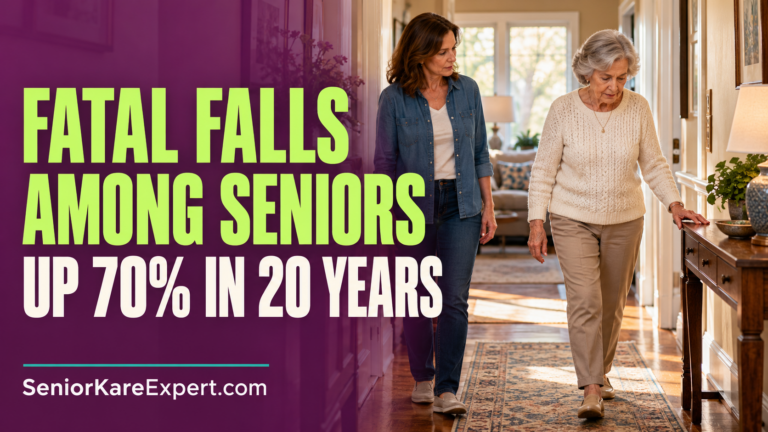
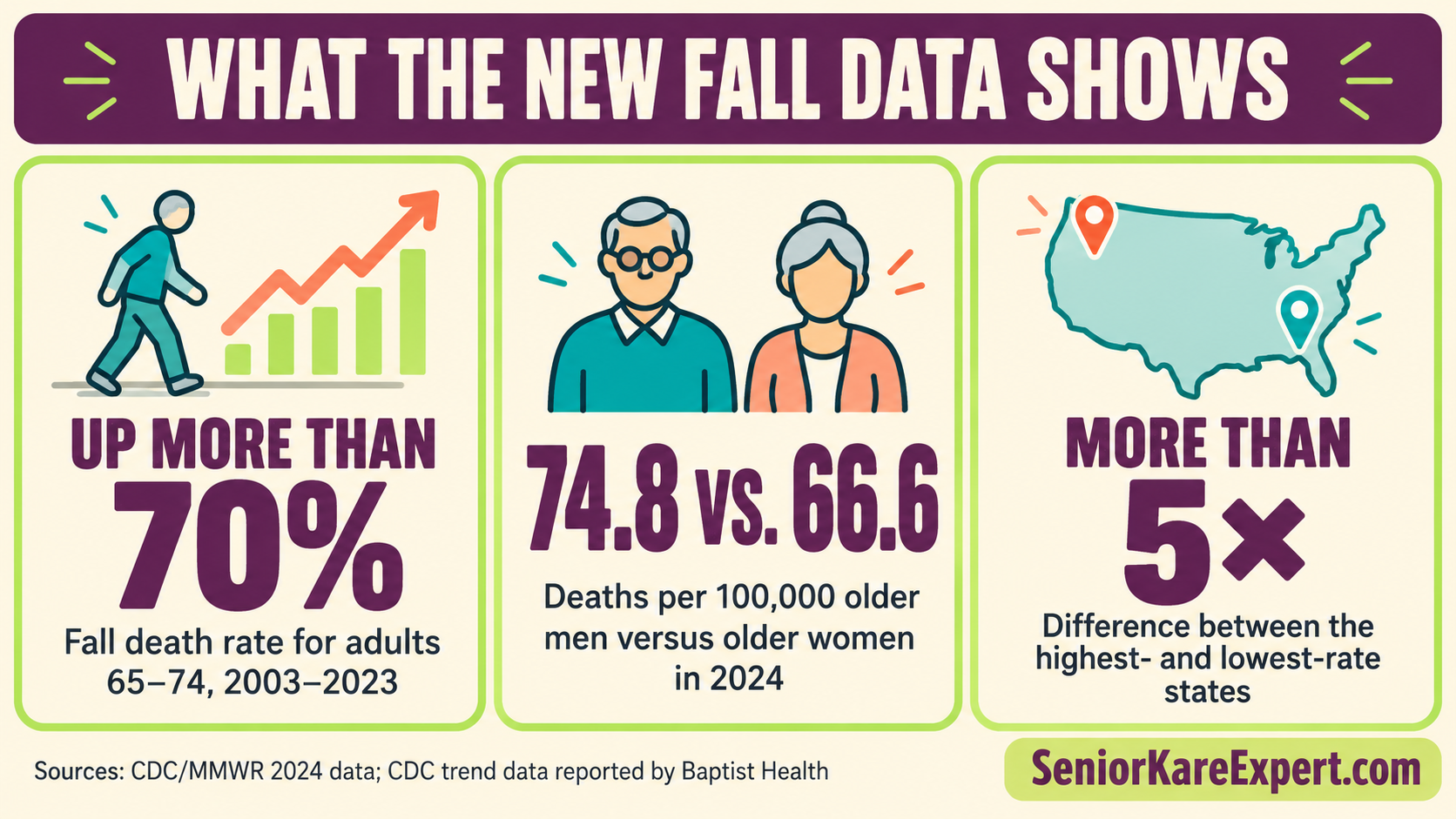
The Centers for Disease Control and Prevention just released updated 2024 numbers showing older men die from falls at a higher rate than older women (74.8 versus 66.6 deaths per 100,000), with risk climbing sharply with age. Zoom out to the twenty-year trend, and it’s worse than any single year suggests: CDC data reported by Baptist Health shows the fall death rate for adults aged 65 to 74 climbed more than 70% between 2003 and 2023, reaching 69.9 deaths per 100,000 people, the highest point in that stretch. Adults 85 and older saw the steepest increases of all. And the numbers didn’t rise evenly across the country: Wisconsin’s fall death rate was more than five times higher than Alabama’s, a gap wide enough that where your parent lives seems to matter almost as much as how careful they are.
This isn’t a story about clumsiness. It’s a story about what happens when more people are living into their 80s and 90s, often alone, often managing more health conditions than their parents did at the same age, in homes that weren’t built with any of that in mind.
Why This Is Happening Now, Not Just “Always Been This Way”
I hear a version of the same question from almost every family I talk to: Is this actually getting worse, or does it just feel that way because I’m paying attention now?
The honest answer, based on what the CDC is reporting, is both. The population of adults over 65 is larger than it’s ever been, which alone would push total numbers up. But the rate, not just the raw count, is rising too, which means something beyond population growth is driving it. The reporting on this data points to a mix of factors: how much access someone has to good healthcare and geriatric care, how many chronic conditions they’re managing, whether their home and community were built with aging in mind, and how much fall-prevention support exists where they live.
None of that is something one family can fix on their own. But understanding it changes the question from why did this happen to what can we actually control.
The Part Nobody Talks About: What Happens When No One Is There
A few years ago, an 85-year-old woman in a Burnaby, British Columbia apartment tripped in her own home. She couldn’t get up. She stayed on that floor for almost three days before anyone found her, and only because her daughter, who lives overseas, hadn’t been able to reach her by phone and asked police to check in. When officers finally forced the door open, they heard her calling out from inside.
That story sticks with me because it’s not really about one unlucky fall. It’s about the gap between “she’s fine most of the time” and “what happens the one time she isn’t.” A police spokesperson’s advice afterward was simple: call emergency services if you find yourself in that position. The hard truth is, she couldn’t. That’s the whole problem in one sentence.
I’ve talked with families who’ve pulled up every rug in the house, installed grab bars in every bathroom, and watched a parent still fall every other month, because fall risk isn’t only about the environment. It’s about balance, medication side effects, vision, blood pressure drops, and a dozen other things that don’t show up until someone’s already on the floor. You can remove every hazard you can see and still not remove the risk.
What Actually Reduces Fall Risk (According to the Data, Not Just Common Sense)
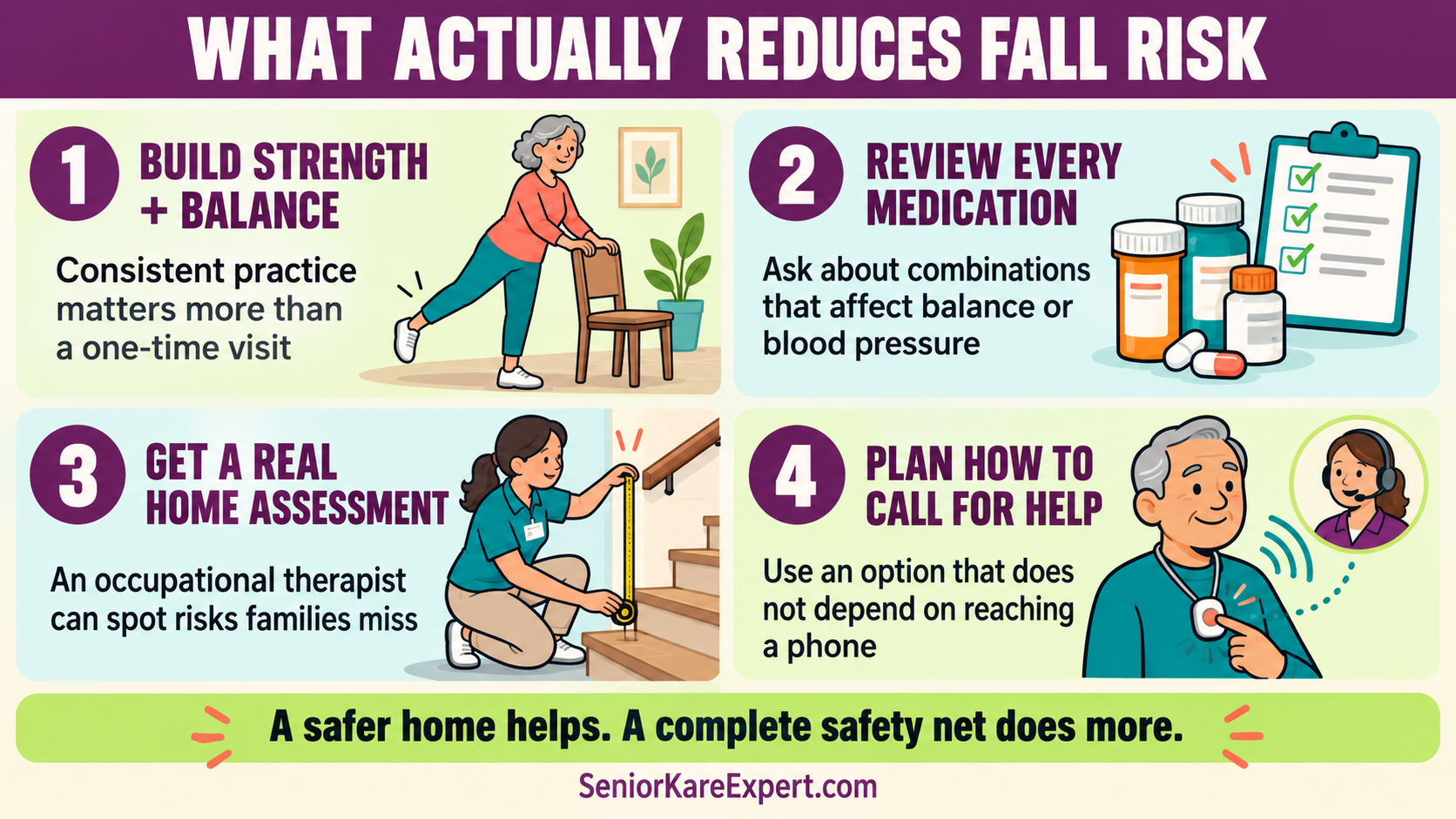
The good news buried in all of this is that falls are one of the more preventable causes of serious injury in older adults, when the right things are in place. Based on what’s actually shown to work:
Strength and balance training, done consistently. Not a one-time physical therapy visit, but ongoing work. One caregiver I came across described her father seeing a physiotherapist weekly for balance and strength exercises, tracked on a simple chart so he could see his own progress. That kind of consistency matters more than any single safety gadget.
A real medication review. Several common medications, especially ones for blood pressure, sleep, and anxiety, increase fall risk as a side effect. A pharmacist or physician reviewing the full list, not just each prescription individually, can catch combinations that raise risk without anyone intending it to.
An honest home safety assessment, ideally from an occupational therapist rather than a well-meaning family member guessing. They catch things you’d never think to look for: the exact height of a step, the grip strength needed for a particular rail, the lighting on a staircase at 2 a.m.
A working way to call for help that doesn’t depend on being able to reach a phone. This is where I’d point you to the piece I wrote on choosing the right medical alert system or GPS tracker, because not all of them are built the same way, and the difference between a device that actually gets a response and one that just sits in a drawer is enormous.
If you want the fuller list of what to check room by room, I’ve also written about how to safely assist a senior who is a fall risk, and about the signs that it’s time to start paying closer attention to how your parent is really doing, which goes beyond falls into the broader picture of when “keeping an eye on things” needs to become something more structured.
The Conversation You Keep Putting Off
If your parent is the one saying “I’m fine, I won’t fall,” here’s something worth trying instead of statistics, which, as more than one tired family member has told me, tend to fall on deaf ears. Ask them what they’re afraid losing their independence would actually look like. Most of the time, the fear isn’t the fall itself. It’s what they think comes after it: being told what to do, losing the house, becoming a burden. If you can get underneath that fear, the safety conversation gets a lot easier, because now you’re solving for what they’re actually scared of, not just what you’re scared of.
You can’t make someone use a grab bar. You can’t make them carry a phone. What you can do is put a real safety net in place that doesn’t depend on them remembering it exists, and have honest conversations about what independence should actually look like at this stage, rather than assuming “fine for now” means “fine for good.”
The data didn’t change what’s true about your parent’s risk. It just confirmed what you’d already started to feel.
Frequently Asked Questions
What does the new CDC data actually show about fatal falls among seniors?
The latest CDC data makes one thing very clear: fatal falls among older adults are not a rare or isolated problem. Over the past 20 years, the number of older Americans dying from falls has risen dramatically, with the increase reaching roughly 70%. That kind of jump points to a major public health issue, not just a string of unfortunate accidents. The data also shows that risk rises with age, and that older men die from falls at higher rates than older women, even though women often report more nonfatal falls. For families, that means fall risk should be taken seriously long before a loved one has a major incident.
It is also important to understand what these numbers mean in real life. A fall is not always “just a fall.” For older adults, it can lead to head trauma, broken hips, internal injuries, loss of mobility, hospitalization, and a rapid decline in independence. In many cases, the fall itself is only part of the story. Recovery can be complicated by frailty, medication side effects, chronic illness, and the emotional fallout of losing confidence. The CDC’s updated figures are a warning sign that families should not ignore repeated stumbles, balance changes, or statements like “I’m fine” when the evidence suggests otherwise.
Why are fatal falls increasing even when more families are trying to prevent them?
There is no single reason, which is why falls can be so frustrating and so dangerous. First, the population is aging. More Americans are living into their late 70s, 80s, and beyond, which naturally increases the number of people at higher risk for balance problems, muscle weakness, vision changes, and chronic conditions that affect movement. Second, many older adults are living independently for longer, which is often a good thing, but it can also mean they are managing stairs, bathrooms, clutter, poor lighting, or medication routines without enough support.
Another major factor is that fall risk builds quietly. A senior may not think of themselves as “at risk” because they have not had a dramatic accident yet. But reduced leg strength, slower reaction time, dizziness, numb feet, low blood pressure, arthritis pain, and certain prescriptions can combine over time. Even small hazards, such as loose rugs, uneven thresholds, or getting up too quickly at night, can become dangerous when those physical changes are already in play. In other words, many falls are the result of multiple overlapping risks, not one obvious mistake.
There is also a communication gap. Families may notice changes before the older adult is ready to admit them. Pride, fear of losing independence, embarrassment, or simple denial can lead someone to minimize symptoms or brush off near-falls. That is why prevention efforts sometimes feel ineffective even after practical upgrades like grab bars and nonslip mats are installed. Home safety matters, but it is only one part of the equation. Medical review, strength and balance training, vision care, footwear, and honest conversations are just as important.
Why do older men have higher death rates from falls than older women?
This is one of the most striking takeaways from the CDC data. Older men die from falls at higher rates than older women, and several factors may help explain that pattern. Men may be more likely to take physical risks, delay asking for help, or underestimate how much their balance, strength, or reaction time has changed. Some may continue climbing ladders, carrying heavy items, or navigating unsafe areas without assistance because they do not see themselves as vulnerable. That mindset can turn a preventable fall into a severe or fatal injury.
There may also be medical and behavioral differences involved. Men may be less likely to discuss dizziness, unsteadiness, or medication side effects with a doctor. They may also delay treatment after a fall, especially if they want to avoid hospitalization or do not want family members to worry. In some cases, a fall that seems minor at first can lead to dangerous complications, including internal bleeding or brain injury, particularly if the person is taking blood thinners or has other health conditions. Waiting too long to get evaluated can worsen the outcome.
For families, the lesson is not that women are safe and men are not. The lesson is that fall prevention should be proactive and personalized. If an older father, grandfather, husband, or uncle insists he is steady enough to keep doing everything the same way he always has, that confidence may not match reality. It helps to focus the conversation on staying active and independent safely, rather than framing help as weakness. Men who resist the label of “frail” may respond better to a practical discussion about preserving mobility, avoiding hospitalization, and staying in control of daily life.
What are the biggest warning signs that an older loved one may be at serious risk of a fall?
Families often look for one dramatic clue, but the warning signs are usually subtle at first. A loved one may start using walls or furniture for support, shuffle instead of fully lifting their feet, hesitate on stairs, complain of feeling lightheaded when standing up, or avoid outings they once handled easily. You may notice bruises they cannot explain, difficulty getting out of a chair, trouble stepping into the bathtub, or a growing fear of walking on uneven ground. Even a “near miss” matters. If someone says, “I almost fell, but I caught myself,” that is a real warning sign, not a lucky non-event to ignore.
Changes in routine can also reveal risk. Maybe they stop carrying laundry downstairs, leave lights off to save effort, wear loose slippers around the house, or rush to the bathroom at night without turning on a lamp. Medication changes are another major issue. Sedatives, sleep aids, blood pressure medicines, antidepressants, and medications that affect blood sugar can all contribute to dizziness, confusion, or instability. Vision and hearing changes can also increase fall risk, because they affect depth perception, environmental awareness, and balance.
Just as important are the emotional signs. Some older adults become defensive when falls are mentioned because they are frightened of what the conversation might lead to. If a parent becomes angry, dismissive, or unusually secretive about small injuries, that can signal they know something is changing but do not want to face it. Pay attention to patterns, not just isolated incidents. One stumble may be nothing. Repeated close calls, increased fatigue, slower walking, and more caution during everyday tasks often point to a problem that deserves a medical and functional assessment.
What should families do now to reduce the risk of a deadly fall?
The best next step is a layered prevention plan, not a single fix. Start with a medical review. Ask the older adult’s primary care provider to evaluate fall risk specifically, including medications, blood pressure changes when standing, strength, gait, balance, vision, hearing, neuropathy, and any history of previous falls or near-falls. If possible, bring a written list of concerns instead of relying on memory during the appointment. A doctor may recommend physical therapy, balance training, assistive devices, vitamin assessment, footwear changes, or adjustments to medications that increase dizziness or sedation.
Then look carefully at the home environment. Remove tripping hazards like loose rugs, cords, and cluttered walkways. Improve lighting in bedrooms, hallways, staircases, and bathrooms. Install grab bars where they are actually needed, especially near the toilet and in the shower, and make sure stair railings are secure on both sides if possible. Encourage sturdy, nonslip shoes instead of socks or floppy slippers. Consider whether frequently used items are stored too high or too low, forcing dangerous reaching, bending, or climbing. For some households, a bedside lamp, night-light, shower chair, raised toilet seat, or medical alert device can make a real difference.
Finally, address the human side of the issue. Fall prevention works better when it is framed as a way to protect independence, not take it away. Instead of saying, “You can’t do this anymore,” try, “We want to make sure you stay strong, mobile, and at home as long as possible.” Encourage exercises that build leg strength and balance, such as walking programs, tai chi, or therapy-guided routines, if approved by a clinician. And if a loved one has already fallen once, take it seriously even if they seem fine afterward. One fall significantly raises the risk of another. The goal is not to create fear. It is to respond early enough that a preventable injury does not become a life-changing or fatal event.
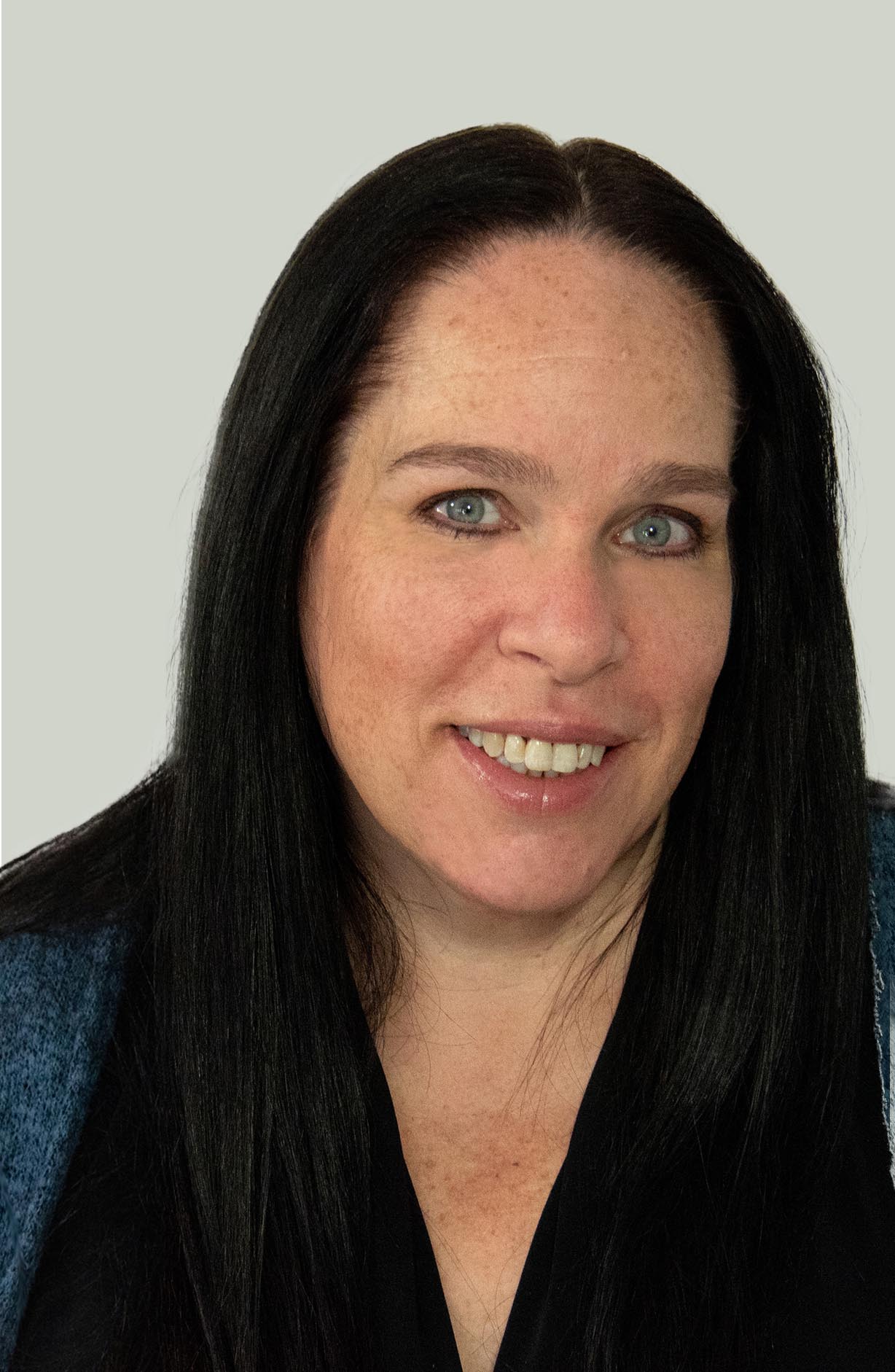
Stacey Eisenberg’s connection to senior care didn’t start with a job posting. It started at age three, in the activity room of a Coney Island nursing home where her mother worked. Growing up inside nursing homes in the 1970s and ’80s, she witnessed what genuine caregiving looked like before the industry got complicated by paperwork, liability, and the relentless pressure to do more with less. That became the standard she has spent her career trying to restore — bringing the Care back to caregiving.
By 13, Stacey had her first official job in senior care. Over the past four decades, she has worked across virtually every setting: nursing homes, assisted living communities, memory care residences, rehab centers, hospitals, and independent living. She served as Director of Fun for nearly 300 independently living seniors, coordinating daily events, activities, and outings.
Today, Stacey and her husband Bryan own A Place At Home – North Austin, an award-winning home care agency serving families across Round Rock, Georgetown, Cedar Park, Leander, Hutto, and surrounding Central Texas communities. Their agency has been voted Best Home Care Agency in Round Rock two years running (2024 and 2025) and received national recognition from Activated Insights as both a Best of Home Care Provider of Choice and Employer of Choice in 2025.
Stacey is a trained recreation therapist and serves as a Community Educator for the Alzheimer’s Association: Capital of Texas chapter. She serves as Treasurer on the Adult Protective Services Advisory Board and as Community Awareness Chair for the Aging Services Council. She co-facilitates the Williamson County Health Resource networking group and is a member of the National Aging in Place Coalition. In 2025, she was recognized as a finalist in the Woman of Wilco awards and is the creator of Peter’s Memory Beads, a passion project to raise funds for the Alzheimer’s Association.
Her expertise has been featured in U.S. News and World Report, AARP, and Care.com.