
Every week, our caregivers walk into homes where families have found creative ways to solve everyday challenges. Sometimes it’s a product recommended by a therapist. Sometimes it’s something another family discovered after months of trial and error. And sometimes it’s a simple gadget that makes everyone on our team say, “I wish more people knew about this.”
After years of helping older adults remain safe and independent at home, Stacey and our caregivers have compiled a list of products that truly make a difference. These aren’t the standard walkers and shower chairs you’ve seen before. They’re the tools that solve real problems, reduce stress for caregivers, and often help older adults maintain their independence a little longer.
Whether you’re caring for a parent, spouse, family member, or friend, we hope you’ll discover something that makes your caregiving journey just a little easier.
We’ll be regularly adding new products to this page. If you have a product you find really helpful for your caregiving needs let us know.
Transfer & Mobility
Multi Handle Transfer Gait Belt (7 Handles)
A traditional gait belt has one or two places to hold. This upgraded version features seven padded handles positioned around the belt, giving caregivers better control during transfers from nearly every angle. Whether you’re helping someone stand from a recliner, pivot into a wheelchair, or steady them while walking, those extra handles make a noticeable difference.
Provides safer transfers while reducing strain on the caregiver’s back and minimizing pulling on the person’s arms or shoulders.
Product:
View product details →
Caregiver tip: If your loved one automatically grabs your arm every time they stand, they’re telling you they need more support. A quality transfer belt protects both of you.
Beasy Transfer Board
Unlike a standard transfer board, the Beasy Board uses a rotating seat that glides across the board instead of requiring someone to scoot. That simple design makes transfers between a bed, wheelchair, recliner, or vehicle much smoother.
Reduces friction and effort during seated transfers.
Product:
View product details →
Stander Wonder Pole
Not every home can accommodate permanently installed grab bars. The Wonder Pole uses floor-to-ceiling tension to create a sturdy support pole without drilling into the walls. Many families place one beside the bed, next to a favorite chair, or in the bathroom.

Creates a reliable place to hold while standing or sitting.
Product:
View product details →
Mangar Camel Inflatable Lifting Cushion
Falls can happen even when every precaution has been taken. The Mangar Camel is an inflatable lifting cushion that gently raises someone from the floor into a seated position without requiring a caregiver to perform a heavy lift.
Reduces the physical effort of helping someone up after a non-injury fall.
Product:
View product details →
Uplift Seat Assist Cushion
Standing from a soft chair can be surprisingly difficult. This self-powered lifting cushion uses a spring mechanism to provide gentle assistance as someone stands.
Makes standing from chairs easier without electricity or batteries.
Product:
View product details →
VOCIC AX10 Electric Chair Lift
Helping someone up from the floor after a fall can be one of the most difficult and stressful situations a caregiver faces. The VOCIC AX10 Electric Chair Lift offers another solution. This portable lift raises a person from floor level to a seated height using battery-powered controls, allowing them to stand or transfer more safely. Built-in wheels make it easy to move from room to room, and the unit folds for storage when not in use.
Unlike inflatable lifting cushions, the AX10 provides a firm chair-style seat, which some individuals find more comfortable and reassuring. It supports up to 300 pounds and requires no assembly.
Provides a safer way to help someone up after a non-injury fall while reducing physical strain on caregivers.
Product:
View product details →
Caregiver tip: If someone experiences repeated falls, don’t focus only on how to get them up. Ask why the falls are happening. Changes in strength, balance, medications, vision, or the home environment may all contribute. Addressing the cause is just as important as choosing the right lifting device.
Leg Lifter Strap
After hip replacement, knee surgery, or a stroke, lifting one leg into bed or into the car may become difficult. A simple leg lifter strap allows the user to guide their leg using their arms instead.
Helps someone move their legs independently during transfers.
Product:
View product details →
Caregiver tip: We remind families that helping doesn’t always mean lifting. Sometimes the right tool allows your loved one to do more on their own while you simply guide the movement.
Car Transfers & Getting Around
Stander HandyBar
The HandyBar slides into the U-shaped latch on a vehicle’s door frame to create a sturdy handle for getting into or out of the car. It stores in the glove compartment and works with most vehicles.

Provides a stable handhold during car transfers.
Product:
View product details →
CarCaddie
The CarCaddie wraps around the upper door frame and creates an adjustable grab handle inside the vehicle. It works especially well in SUVs and pickup trucks where seats sit higher.
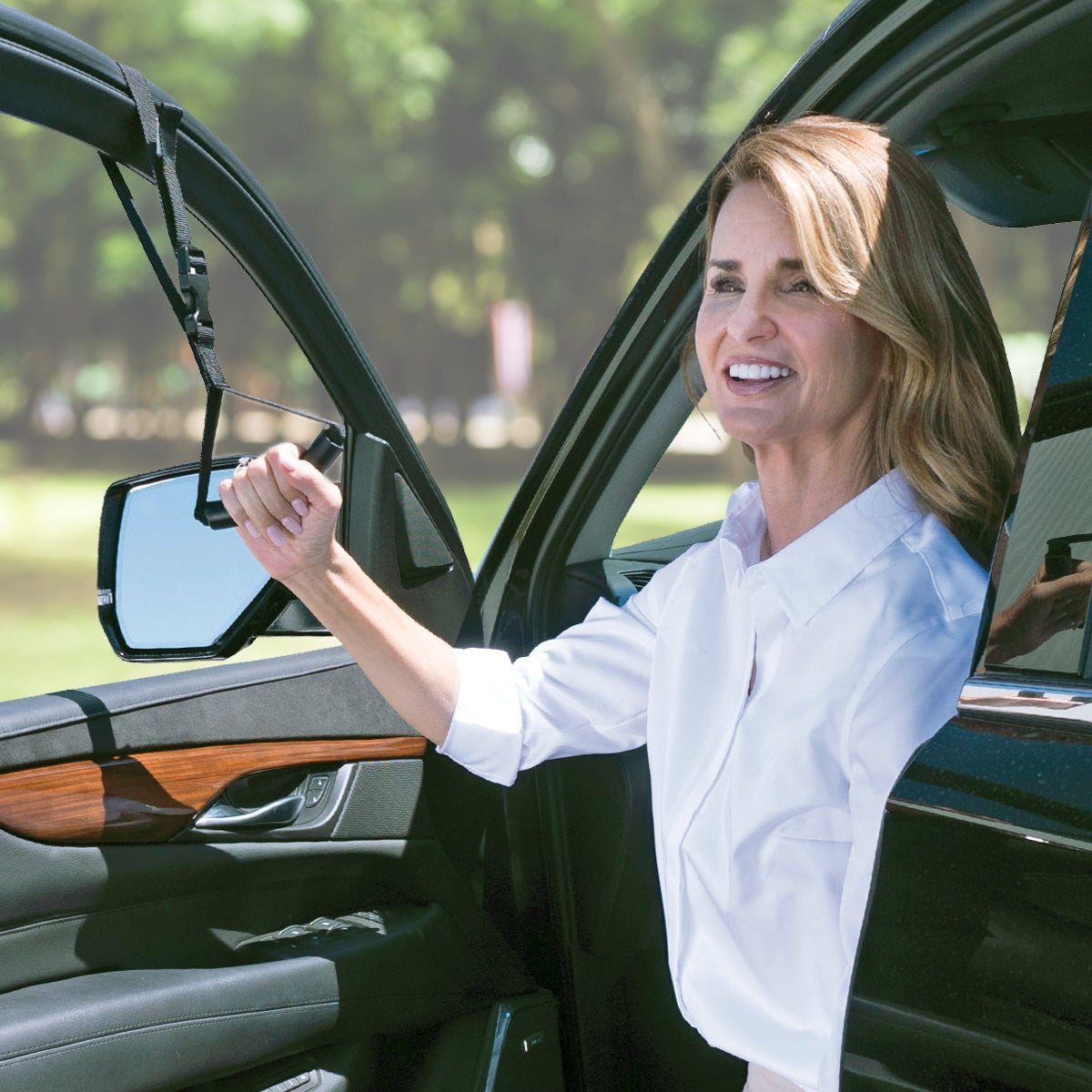
Adds extra support while entering or exiting a vehicle.
Product:
View product details →
Caregiver tip: Watch how your loved one gets out of the car. If they’re pulling on the steering wheel or dashboard, it’s usually time for a safer solution.
Swivel Seat Cushion
Twisting while getting into a vehicle can be painful after surgery or with arthritis. A swivel seat cushion rotates with the user, allowing them to pivot smoothly into position.
Reduces twisting of the hips, knees, and back during car transfers.
Product:
View product details →
Portable Vehicle Step
Many SUVs and trucks sit too high for comfortable entry. Portable door latch steps attach to the vehicle’s door latch and provide a temporary step, making it easier to climb in or reach the roof for loading mobility equipment.
Makes entering taller vehicles safer and more comfortable.
Product:
View product details →
Next up: Bathroom Safety & Personal Care, followed by Bedroom Safety.
Bathroom Safety & Personal Care
The bathroom is one of the most hazardous rooms in the home. Wet floors, tight spaces, and frequent transfers create a higher risk for falls. Fortunately, a few well-designed products can make daily routines safer while helping older adults maintain their dignity and independence.
Toilevator
Many people are familiar with raised toilet seats, but the Toilevator takes a different approach. Instead of sitting on top of the toilet, it raises the entire toilet several inches while maintaining a clean, built-in appearance.
Makes sitting down and standing up easier without the wobble that some raised toilet seats create.
Product:
View product details →
Bidet Toilet Seat
A bidet isn’t just a luxury item. For someone with arthritis, shoulder pain, limited mobility, or balance concerns, it can reduce the need for twisting and reaching during personal hygiene. Many models also include warm water, adjustable spray settings, heated seats, and warm air drying.
Promotes independence while making personal hygiene easier and more comfortable.
Product:
TOTO Washlet: View product details →
Bio Bidet: View product details →
Caregiver tip: One of the hardest conversations families have is about helping with personal care. A bidet can restore privacy while reducing the amount of assistance someone needs.
Toilet Tissue Aid
Limited shoulder movement, back pain, or recent surgery can make personal hygiene difficult. A toilet tissue aid extends reach and helps people manage this task independently.
Improves independence for individuals with limited flexibility or range of motion.
Product:
View product details →
Handheld Shower Head with Magnetic Dock
A handheld shower head offers much more flexibility than a fixed shower head. Models with magnetic docking make it easy to remove and replace the shower head, even for someone with arthritis.
Makes bathing easier while allowing caregivers to assist without constantly repositioning the person.
Product:
View product details →
Long Handle Lotion Applicator
Dry skin becomes more common as we age, but reaching the back, lower legs, and feet isn’t always easy. A long-handled applicator makes applying lotion or medicated creams much simpler.
Helps older adults care for their skin without excessive bending or twisting.
Product:
View product details →
Caregiver tip: Look for opportunities to preserve routines. Independence isn’t only about safety. It’s also about continuing the habits that make someone feel like themselves.
Bedroom Safety
Many falls happen before breakfast. They happen while getting out of bed, walking to the bathroom, or reaching for something on the nightstand. Small improvements in the bedroom can make mornings and nighttime much safer.
Bed Ladder Assist
A bed ladder attaches to the foot of the bed and provides sturdy handholds that help someone pull themselves into a sitting position one step at a time.
Makes sitting up in bed easier for people with decreased core strength.
Product:
View product details →
Mangar SlideWays Slide Sheet
Repositioning someone in bed can be one of the most physically demanding parts of caregiving. The Mangar SlideWays Slide Sheet uses a low-friction material that allows caregivers to gently slide someone higher in bed or reposition them from side to side with much less effort. It also reduces skin friction, making it a helpful option for individuals who spend long periods in bed.
Makes repositioning in bed easier while reducing strain on the caregiver and minimizing friction on fragile skin.
Product:
View product details →
Caregiver tip: One of the most common causes of caregiver back injuries happens while trying to pull someone up in bed. A slide sheet allows you to guide the movement instead of relying on strength alone.
Motion Activated Under Bed Lights
These battery-powered lights automatically illuminate the floor when someone gets out of bed. Instead of walking through a dark room, they immediately have a lighted path to the bathroom.
Reduces nighttime falls caused by poor visibility.
Product:
View product details →
Wireless Bed Exit Sensor
Unlike older alarm systems that make loud noises in the bedroom, many newer systems quietly alert a caregiver through a wireless pager or receiver.
Provides early notification when someone at risk for falls gets out of bed without assistance.
Product:
View product details →
Caregiver tip: A bed alarm doesn’t replace supervision. It simply gives caregivers a few extra moments to respond before someone starts walking alone.
Bedside Organizer
It sounds simple, but keeping glasses, hearing aids, medications, a phone, and the TV remote within reach prevents unnecessary trips across the room.

Reduces reaching, bending, and unnecessary walking.
Product:
View product details →
Bedside Safety Floor Mat
For someone who has rolled out of bed or is at risk for falls, a cushioned bedside floor mat can help reduce the severity of an injury. Some models also work with bed exit alarm systems.
Provides additional protection if someone falls while getting out of bed.
Product:
View product details →
Caregiver tip: Before going to bed tonight, walk the same path your loved one takes to the bathroom. Remove throw rugs, move cords out of the way, and make sure there’s enough light to see the floor. Sometimes the best safety device is simply a clear path.
Everyday Independence
The little things matter.
Buttoning a shirt. Taking medications on time. Picking something up off the floor. Enjoying a meal without frustration. These everyday tasks often become challenging long before someone needs full-time care. The right tool can restore confidence while making life easier for both the older adult and the caregiver.
Stander CouchCane
Many older adults have a favorite recliner or couch they don’t want to replace, even if it’s become difficult to get out of. The Stander CouchCane slides discreetly under the furniture cushion and provides a sturdy support handle to help users stand with greater confidence. It also includes a convenient organizer pouch for keeping essentials like glasses, the TV remote, or a phone within easy reach.
Makes standing from a couch or recliner easier while reducing the risk of losing balance during transfers.
Product:
View product details →
Able Tray
This clever device combines a sturdy support handle with a swiveling tray table. It provides a secure place to push while standing and a convenient surface for meals, books, puzzles, or medications. The tray swivels out of the way when it’s time to get up, making it especially helpful for someone who spends a lot of time in their favorite chair.
Adds stability while reducing the need to constantly reach for nearby tables.
Product:
View product details →
Caregiver tip: If someone stacks books or uses a TV tray to help themselves stand, they’re creating their own support system. Replacing it with a product designed for that purpose greatly improves safety.
TimerCap Medication Bottle Cap
Taking medication at the right time can be confusing, especially when routines change. A TimerCap replaces the original prescription bottle cap and displays how much time has passed since the bottle was last opened.
It’s surprisingly simple, yet many families tell us it ends the daily question: “Did I already take my medicine?”
Helps prevent missed or accidental double doses.
Product:
View product details →
Reacher with a Rotating Jaw
Dropping something on the floor doesn’t seem like a big deal until bending becomes painful or unsafe. A quality reacher with a rotating jaw allows users to pick up everything from clothing to a TV remote without stretching or losing their balance. Look for one with rubber gripping tips and a magnetic end for picking up small metal objects like keys or batteries.
Reduces bending, reaching, and the risk of falls.
Product:
View product details →
Flexible Sock Aid
Putting on socks can become surprisingly difficult after joint replacement surgery, with arthritis, or when flexibility decreases. Unlike older rigid models, flexible sock aids work with different sock styles and conform more naturally to the foot, making them easier for many people to use.
Makes dressing easier without bending over.
Product:
View product details →
Frequently Asked QuestionsCaregiver tip: Pay attention to the tasks your loved one quietly stops doing. Those small changes often tell you where they need support long before they ask for help.
What kinds of caregiver products can make the biggest difference at home?
The most helpful caregiver products are usually the ones that solve everyday problems in simple, practical ways. In many homes, that means tools that improve safety, reduce physical strain, and help older adults stay as independent as possible. Some of the most valuable categories include transfer aids, shower chairs, raised toilet seats, non-slip mats, bedside rails, medication organizers, adaptive utensils, recliner assist devices, and motion-sensor lighting. These products may not seem dramatic at first glance, but they can significantly lower the risk of falls, make daily routines easier, and reduce stress for both the older adult and the family caregiver. What makes these products especially useful is that they support real-life needs without requiring a complete home remodel. For example, a simple grab bar in the right place can help someone safely get in and out of the shower. A reacher tool can allow a person to pick up dropped items without bending. A pill dispenser can help prevent missed doses or medication confusion. These small changes often improve confidence, preserve dignity, and create a safer environment for aging in place.How do I know which caregiver products are actually worth buying?
The best caregiver products are the ones that match the specific needs, limitations, and routines of the person using them. Before buying anything, it helps to look closely at where the biggest challenges happen during the day. Is the person having trouble standing up from a chair, getting into bed, bathing safely, remembering medications, or moving around the house at night? Once you identify the real problem, it becomes much easier to choose a product that offers meaningful support instead of adding clutter. It is also smart to focus on quality, ease of use, and safety rather than gimmicks. Look for products with strong reviews, clear weight limits, durable materials, and simple instructions. If a product is too complicated, uncomfortable, or awkward to use, it often ends up abandoned. When possible, ask for guidance from a home care professional, occupational therapist, physical therapist, or medical provider. They can often recommend products based on mobility level, balance issues, cognitive changes, or recovery needs. A thoughtful recommendation can save families money and prevent the frustration of buying items that are not a good fit.Are there caregiver products that help prevent falls without making the home feel medical?
Yes, and that is one reason many families are pleasantly surprised by how effective modern caregiver products can be. Fall prevention does not always require turning a home into a clinical space. Many of the best solutions are subtle, affordable, and easy to blend into everyday life. Motion-activated night lights, non-slip rug pads, shower grab bars with clean designs, handheld showerheads, chair risers, and better footwear can all improve safety without making the home feel institutional. Often, the goal is to remove hidden hazards and support safer movement in natural ways. Better lighting in hallways and bathrooms can reduce nighttime trips and missteps. Lever-style door handles can be easier for arthritic hands than round knobs. Bed rails designed for home use can provide support without overwhelming the room. Even something as simple as a long-handled shoehorn or dressing aid can reduce risky bending and balancing. In many cases, the most successful products are the ones that quietly support independence while preserving comfort, familiarity, and the overall feel of home.Can these products really reduce stress for family caregivers too?
Absolutely. Caregiver products are not only for the older adult; they also protect the family members and professional caregivers who are helping day after day. Tasks like lifting, transferring, bathing, or assisting with dressing can be physically demanding and emotionally exhausting when the right tools are missing. Products such as transfer belts, slide sheets, adjustable beds, lift chairs, overbed tables, and toileting supports can make these routines safer and more manageable for everyone involved. When a product reduces effort, improves predictability, or lowers the chance of injury, it can ease a tremendous amount of caregiver stress. A family member may feel less anxious helping a loved one shower if grab bars and a shower bench are in place. Medication systems can reduce the constant worry about whether pills were taken correctly. Bedside commodes or urinals can simplify overnight care and cut down on rushed, risky trips to the bathroom. In real-world caregiving, these practical improvements matter. They can save time, improve confidence, reduce burnout, and help families feel more capable in situations that often feel overwhelming.Should families wait until there is a crisis before adding caregiver products to the home?
In most cases, no. One of the most common mistakes families make is waiting until after a fall, hospitalization, or major decline to start looking for supportive products. It is usually much easier to introduce helpful tools early, while the older adult is still adjusting gradually and has time to build confidence using them. Proactive changes can prevent injuries, preserve independence longer, and reduce the need for more urgent interventions later. Starting early also gives families the chance to make thoughtful choices instead of rushed decisions during a stressful moment. A product that seems unnecessary today may become essential in a few months, especially if mobility, balance, strength, or memory begin to change. By planning ahead, families can test what works, make adjustments, and create a safer home environment step by step. The goal is not to overmedicalize daily life. It is to stay ahead of common challenges and make home care easier, safer, and more sustainable for everyone involved.
Stacey Eisenberg’s connection to senior care didn’t start with a job posting. It started at age three, in the activity room of a Coney Island nursing home where her mother worked. Growing up inside nursing homes in the 1970s and ’80s, she witnessed what genuine caregiving looked like before the industry got complicated by paperwork, liability, and the relentless pressure to do more with less. That became the standard she has spent her career trying to restore — bringing the Care back to caregiving.
By 13, Stacey had her first official job in senior care. Over the past four decades, she has worked across virtually every setting: nursing homes, assisted living communities, memory care residences, rehab centers, hospitals, and independent living. She served as Director of Fun for nearly 300 independently living seniors, coordinating daily events, activities, and outings.
Today, Stacey and her husband Bryan own A Place At Home – North Austin, an award-winning home care agency serving families across Round Rock, Georgetown, Cedar Park, Leander, Hutto, and surrounding Central Texas communities. Their agency has been voted Best Home Care Agency in Round Rock two years running (2024 and 2025) and received national recognition from Activated Insights as both a Best of Home Care Provider of Choice and Employer of Choice in 2025.
Stacey is a trained recreation therapist and serves as a Community Educator for the Alzheimer’s Association: Capital of Texas chapter. She serves as Treasurer on the Adult Protective Services Advisory Board and as Community Awareness Chair for the Aging Services Council. She co-facilitates the Williamson County Health Resource networking group and is a member of the National Aging in Place Coalition. In 2025, she was recognized as a finalist in the Woman of Wilco awards and is the creator of Peter’s Memory Beads, a passion project to raise funds for the Alzheimer’s Association.
Her expertise has been featured in U.S. News and World Report, AARP, and Care.com.